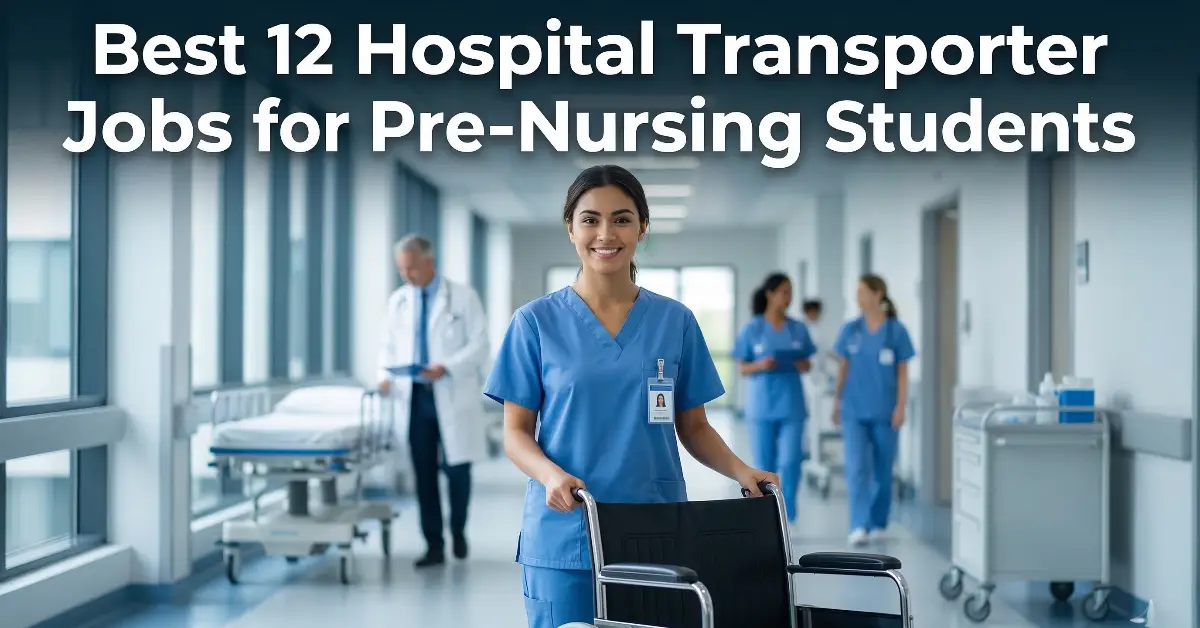
Best 12 Hospital Transporter Jobs for Pre-Nursing Students? This guide shows top roles, duties, pay, and how to start quickly. Gain real hospital experience, build nursing skills, and boost your future career with easy entry-level jobs.
Introduction
If you are planning to become a nurse, you might be wondering, “Where do I start?” The answer is simple: start inside a hospital. This guide on the Best 12 Hospital Transporter Jobs for Pre-Nursing Students will help you find easy entry-level jobs that give you real experience, even before nursing school.
These jobs let you work with patients, see how hospitals run, and learn skills that books cannot teach. The best part? You don’t need a degree or experience for many of these roles. You can start quickly, earn money, and build a strong future in healthcare at the same time.
Why Hospital Transporter Jobs Are a Smart Choice
Hospital transporter jobs may sound simple, but they are very powerful for your future. You work with real patients, learn how hospitals work, meet nurses and doctors daily, build confidence before nursing school, and improve communication skills. These jobs are perfect for students who want a strong head start in nursing.
Read More: Top 10 Best Hospital Jobs for Nursing Students
Best 12 Hospital Transporter Jobs for Pre-Nursing Students
1. Patient Transporter (Most Popular Job)
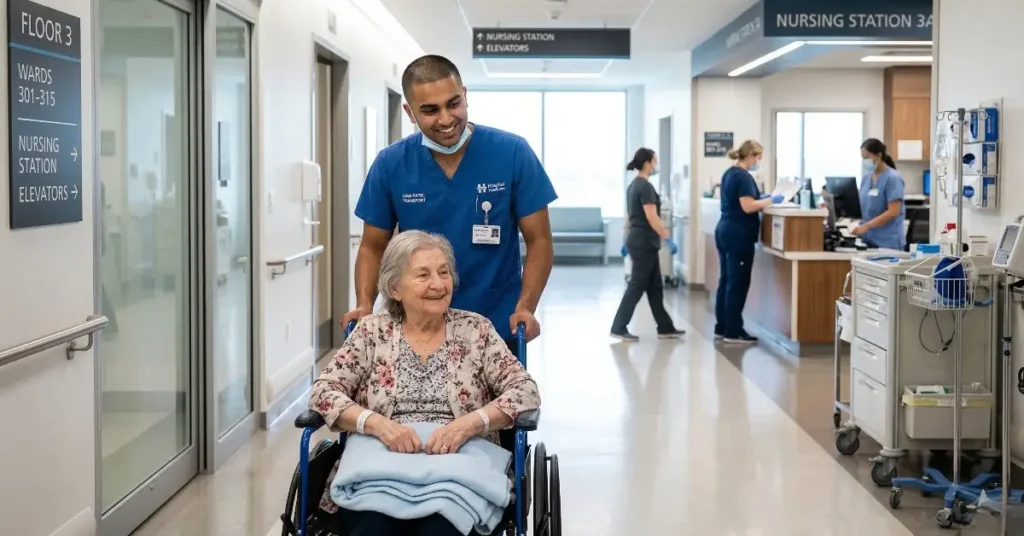
What you do: Move patients using wheelchairs or stretchers, take them to labs, surgery rooms, or wards, and make sure they feel safe and comfortable. Why it’s great: You spend time with patients and learn basic care skills every day.
2. Emergency Room (ER) Transporter
What you do: Help move patients in emergencies and support doctors and nurses quickly. Why it’s powerful: You learn how to stay calm under pressure.
3. Radiology Transport Assistant
What you do: Take patients to imaging rooms and help them prepare for tests. Why it’s useful: You learn about medical tests and equipment.
4. Surgical Transport Aide
What you do: Transport patients to operation rooms and follow hygiene rules. Why it stands out: You get a closer look at surgeries.
5. Patient Escort (Easy & Beginner-Friendly)
What you do: Guide patients and visitors and help them find departments. Why it’s helpful: You improve communication skills.
6. ICU Transport Assistant
What you do: Carefully move ICU patients and assist trained staff. Why it’s important: You gain serious patient care experience.
7. Labor & Delivery Transporter
What you do: Help mothers reach delivery rooms and assist before and after childbirth. Why it’s special: You experience meaningful moments in healthcare.
8. Pediatric Transport Assistant
What you do: Move young patients safely and comfort nervous children. Why it’s rewarding: You learn patience and empathy.
9. Rehabilitation Transport Aide
What you do: Take patients to therapy sessions and support recovery. Why it’s valuable: You see long-term healing progress.
10. Transport Dispatcher (Office-Based Role)
What you do: Assign transport tasks and manage schedules. Why it’s useful: You develop organization and teamwork skills.
11. Night Shift Transporter
What you do: Handle patient movement during night hours and support emergencies. Why choose this: Night shifts often pay more.
12. Volunteer Hospital Transporter (Best for Beginners)
What you do: Assist staff with basic tasks and learn hospital systems. Why it’s smart: It helps you gain first experience.
Skills You Will Learn
These jobs help you build communication, empathy, teamwork, time management, and confidence. These skills are essential for nursing school and future careers.
Salary Expectations
Hospital transporter jobs usually pay between $12 and $20 per hour. You may earn more with night shifts, overtime, and extra benefits depending on the hospital.
How to Get Started
Step 1: Create a simple resume with your education, skills, and any volunteer work. Step 2: Apply online through hospital websites or job platforms like Indeed. Step 3: Prepare for interviews by practicing common questions. Step 4: Start with volunteering if you don’t have experience.
Pro Tips to Succeed
Always be polite and respectful, listen carefully to patients, stay active, learn daily, and ask questions from experienced staff. These habits will help you grow quickly.
How This Job Helps Your Nursing Career
These roles give you real hospital experience, build confidence, improve your resume, and make your nursing school application stronger. Many successful nurses started this way.
Read More: Top 10 Best Dental Hygienist Jobs in Texas for Recent Grads
Conclusion
Starting with one of the Best 12 Hospital Transporter Jobs for Pre-Nursing Students is a smart and powerful step. These jobs are easy to start but offer valuable experience that can shape your future. You don’t need experience or a degree—just a willingness to learn and help others. Start today and move closer to your nursing career.
Key Takeaways
Hospital transporter jobs are easy entry-level roles. They are perfect for pre-nursing students. They provide real hospital experience and build important skills. They also improve your chances of getting into nursing school.
Frequently Asked Questions(FAQs)
Hospital transporter jobs involve safely moving patients between different departments like labs, surgery, and wards. These roles are ideal for pre-nursing students because they offer real hospital exposure and basic patient interaction experience.
Yes, hospital transporter jobs are one of the best entry-level roles for nursing students. They help you understand hospital workflows, improve communication skills, and gain hands-on patient care experience before starting nursing school.
Most hospital transporter jobs do not require prior experience. Hospitals usually provide basic training, making these roles perfect for beginners or pre-nursing students looking to enter the healthcare field.
Hospital transporters typically earn between $12 and $20 per hour, depending on location and experience. Night shifts and overtime can increase your total earnings.
Key skills include communication, empathy, physical stamina, and teamwork. These skills help you interact with patients effectively and work smoothly with hospital staff.
